We're currently looking for landscapers, suppliers and lead partners for this website. Click here for details.Typical cost Design plan: $500–$5,000 per propertyTypical cost 3D visualization: Included with designTypical cost Small install: $10,000+ per projectTypical cost Full backyard: $50,000–$100,000+Typical cost Consultation: FreeCarmel Fall tip Fall is a great time to plan spring projects.Carmel Fall tip Note drainage problems during fall rains.We're currently looking for landscapers, suppliers and lead partners for this website. Click here for details.Carmel Winter tip Book designers early before the spring rush.Carmel Winter tip Winter is a good time to plan in detail.Carmel Spring tip Start installs early to enjoy the yard all season.Carmel Spring tip Walk your yard to note sun and shade.Carmel Summer tip Notice how you use the yard in summer.Carmel Summer tip Plan shade for patios and play areas.U.S. Census Bureau Hamilton County, Indiana: 3,803 new homes permitted so far in 2026 (through August)
It's tempting to pile mulch on your Carmel perennial beds during fall cleanup, but timing matters. University of Minnesota Extension says it's very important not to put winter cover mulch on perennials before the soil begins to freeze, because it can encourage growth under the mulch that weakens the plants. Apply it as soon as the soil begins to freeze, or any time after that. [UMN Extension]
Why winter mulch helps
Snow is the best winter protection for perennials, but snowfall isn't always enough to insulate them. A protective cover helps against extreme cold and, more importantly, keeps fluctuating temperatures and early spring warmups from pulling plants out of dormancy. [UMN Extension]
Alternating freezing and thawing can lift or heave plants out of the soil and destroy roots. [UMN Extension]
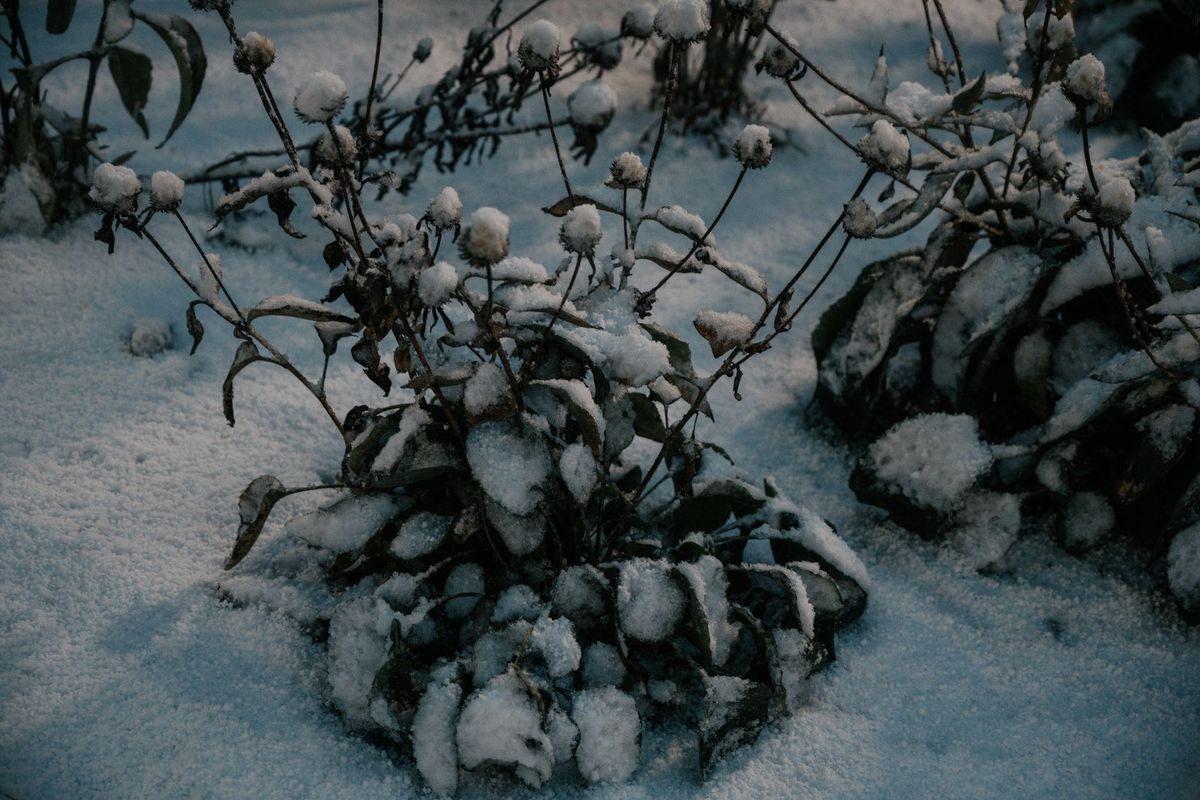
Leaving perennial stems, leaves and seed heads standing over winter also protects the crown and roots, catches fallen leaves, and gives food and shelter to native pollinators, beneficial insects and birds. [Iowa State Extension]
What to use and how much
UMN Extension lists five or six inches of whole or shredded leaves, partially decomposed compost, ground corn stalks or straw as useful winter mulches. [UMN Extension]
Iowa State Extension suggests about four inches of mulch over the crown after the ground freezes. For tender perennials and ones planted in late summer or early fall, a 6- to 8-inch layer should be adequate. [Iowa State Extension]
Wood chips and shredded bark are excellent mulches, but they're better used between plants, where they can stay undisturbed all year. [UMN Extension]
Skip foam cones or domes. They can warm plants too early in spring and make them more susceptible to cold damage. [Iowa State Extension]
Mulch can go right on top of snow, and the snow adds to its insulating value. [UMN Extension]
In spring
Remove the mulch as it thaws in early spring to avoid crown rot and other fungus problems, but keep a cover handy in case of a late freeze. [UMN Extension]
 CARMEL